
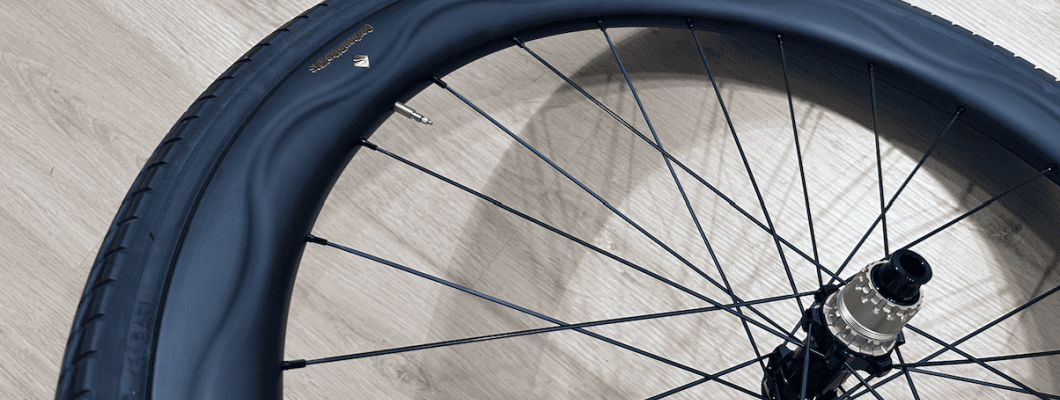
Breaking the Physical Limits of Lightgweighting
A common belief in bicycle wheel technology is being re-examined: weight is not always the determining factor for speed. In reality:
- During climbs: Weight directly affects climbing efficiency; every 100 grams saved is significant.
- On flat roads: Aerodynamic drag dominates; weight has minimal impact.
- Power output: Regardless of terrain, higher power output is always fundamental to speed.
This is precisely the starting point for our fundamental rethinking of wheel design philosophy.
The Weight Revolution in Carbon Fiber Rims
Modern materials science has pushed carbon fiber rims to their extremes:
The use of T1000 carbon fiber has reduced the weight of a 50mm-deep rim to around 330 grams.
This figure is approaching the theoretical limit of current production technology.
However, pure weight reduction has introduced a new challenge: compromised structural stiffness.
The Cost of Lightweighting: The Lateral Stiffness Problem
When carbon fiber usage is minimized to the extreme, rim lateral stiffness can be affected:
- The rim may deform during hard accelerations.
- Cornering precision may decrease.
- Heavier riders may experience noticeable "flex."
The traditional solution often involves adding more material, which contradicts the goal of lightweighting.
Our Answer: The Flucircle Bionic Structural Design
We found inspiration in the mechanical principles of nature:
Design Philosophy: The Lesson from Paper
A flat sheet of paper bends easily, but when folded into a corrugated structure:
Weight is barely increased.
Lateral stiffness improves exponentially.
It can support objects far exceeding its own weight.
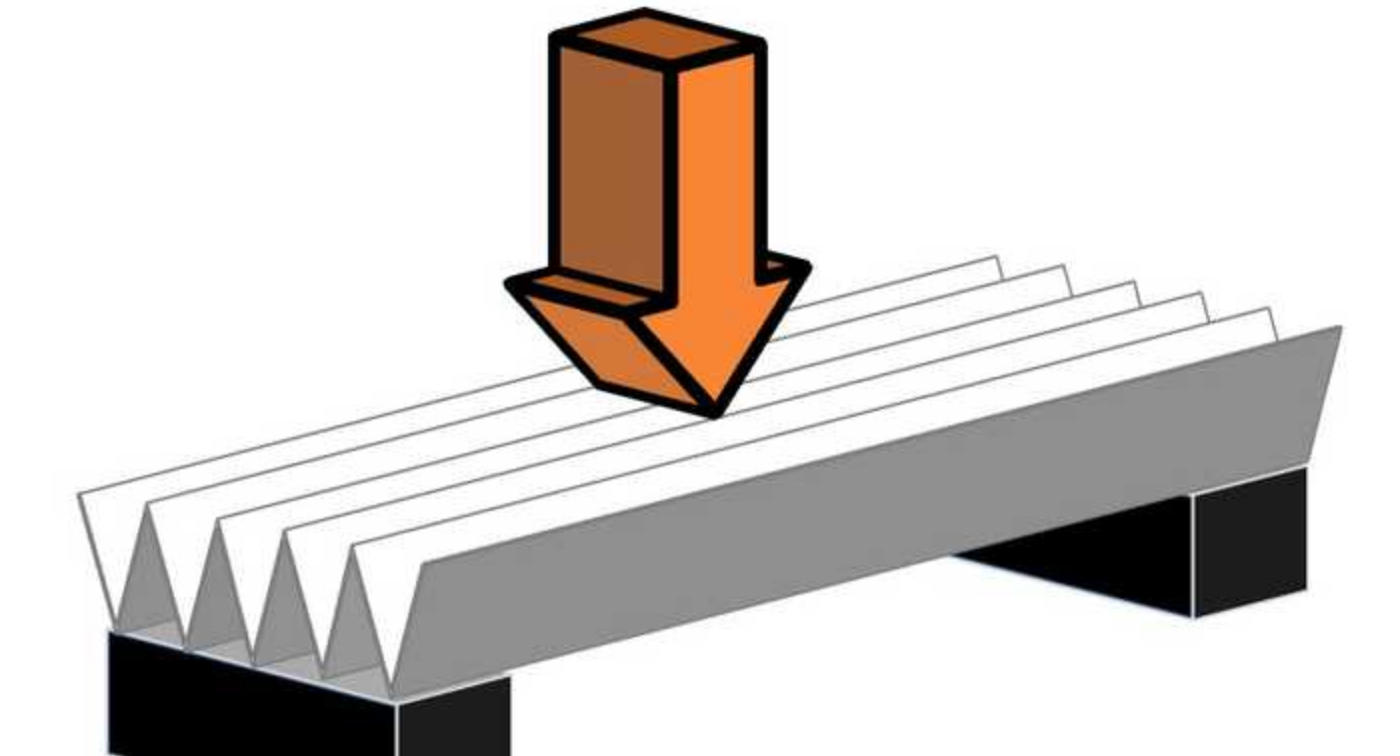
The Core of Flucircle Technology
We applied this principle to the sidewall design of the rim:
- Bionic Corrugated Structure: Introducing precisely calculated corrugations in key stress areas of the rim.
- Localized Reinforcement: Strengthening the structure only where stiffness is needed.
- Weight Optimization: Avoiding thickening across the entire area, maintaining extreme lightweight.
Performance Breakthrough
Compared to traditional designs, Flucircle technology achieves:
- 35% increase in lateral stiffness, rivaling heavyweight race wheels.
- Only 2-3% increase in weight, maintaining top-tier lightweight status.
- Aerodynamic optimization: The corrugated structure also improves airflow attachment.
Enhancement of Actual Riding Experience
Acceleration Response
More direct starts, with no lag in power transfer.
Virtually imperceptible wheel deformation during sprints out of the saddle.
Cornering Performance
Precise trajectory control, especially in high-speed turns.
Increased confidence, particularly on wet or slippery surfaces.
Long-Distance Comfort
Optimized vertical compliance is not sacrificed for increased stiffness.
Reduced fatigue accumulation, suitable for endurance rides and races.
Technical Specification Comparison
Future Outlook
Flucircle technology is just the beginning of our rethinking of wheel design:
Developing customized corrugation patterns for different rim depths.
Exploring synergies with different carbon fiber layup directions.
Researching dynamically variable structures that adapt to different riding conditions.
Conclusion: Redefining What's Possible
In bicycle engineering, true innovation often comes from challenging established assumptions. Flucircle technology proves that lightweighting and stiffness are not a zero-sum game. Through intelligent structural design rather than simple material addition, we have opened a new performance dimension for carbon fiber wheelsets.
This is not just about a lighter, stiffer rim; it is a redefinition of the boundaries of bicycle performance. The difference may be almost invisible on the weight scale, but in every pedal stroke, in every corner, you will feel a fundamental difference.
Technical Statement: The Flucircle design is protected by multiple international patents. All data is based on independent third-party laboratory test results. Actual experience may vary depending on specific riding conditions and individual perception.
Related Products
![Flucircle [Ultralight] 380g 700C 47x40mm Carbon Tubeless Gravel / CX / MTB / Beach Racer Wheels Rim](https://www.carbonbikekits.com/image/cache/catalog/Rim/Road/40mm/Flucircle-[Ultralight]-380g-700C-47x40mm-Carbon-Tubeless-Gravel-CX-MTB-Beach-Racer-Wheels-Rim-250x250.jpg "Flucircle [Ultralight] 380g 700C 47x40mm Carbon Tubeless Gravel / CX / MTB / Beach Racer Wheels Rim")
![Flucircle [Ultralight] 380g 700C 47x40mm Carbon Tubeless Gravel / CX / MTB / Beach Racer Wheels Rim](https://www.carbonbikekits.com/image/cache/catalog/Rim/Road/40mm/flucircle/Flucircle-[Ultralight]-380g-700C-47x40mm-Carbon-Tubeless-Gravel-CX-MTB-Beach-Racer-Wheels-Rim-1-250x250.jpg "Flucircle [Ultralight] 380g 700C 47x40mm Carbon Tubeless Gravel / CX / MTB / Beach Racer Wheels Rim")

Leave a Comment